Key takeaways
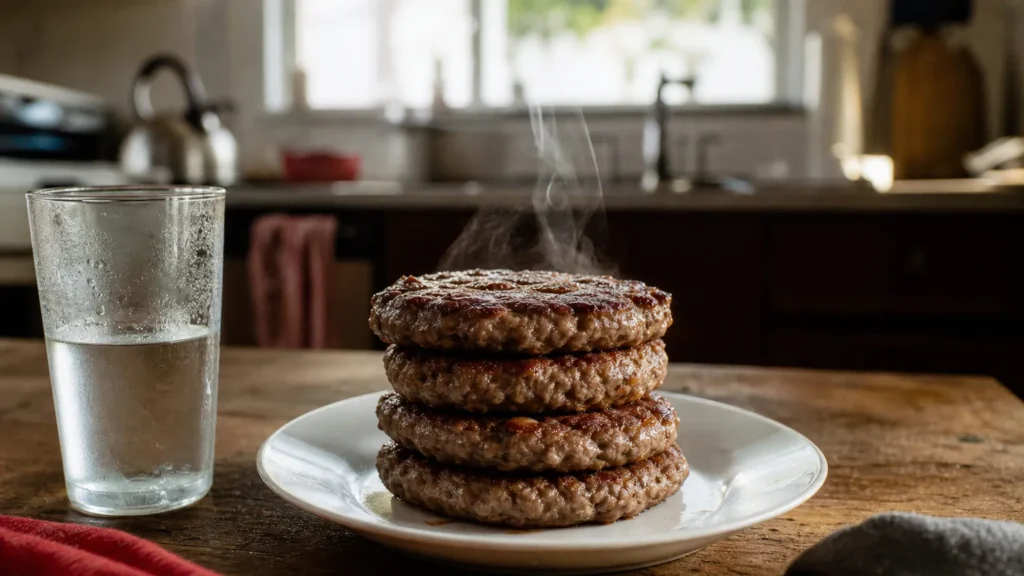
- The Keto Project is a fit doctor eating 20 plain Burger King patties a day for 30 days, no bun, no condiments, water only.
- The book lists blood testing before the burger month and after it, not at the midpoint.
The Keto Project is my 2025 film about a fit doctor, Dr. Mike Brandon, who ate 600 plain Burger King patties in 30 days on camera, with bloodwork and fitness tests along the way. On Day 15 he was halfway, doubled over in stomach pain, and a day removed from a fitness retest where he got worse in every event. How the month ends is in the film, which you can rent or buy on Amazon Prime Video.
What is the keto project, and what happened on Day 15?
The Keto Project is a fit doctor eating 20 plain Burger King patties a day for 30 days, no bun, no condiments, water only. On Day 15 he hit the halfway mark in pain. Dr. Mike wrote that he woke twice for urgent trips to the bathroom. The second half had begun, but it did not feel like a win “when I’m doubled over in stomach pain.”
He also dreamed he was lecturing on 100 ways to eat cheese and meat. That is not hyperbole. That is a man’s brain negotiating with his stomach. If you aren’t testing, you’re guessing, so we tested. The full setup lives on the Keto Project Movie home page.
Was there a Day 15 blood draw in the keto project?
The book lists blood testing before the burger month and after it, not at the midpoint. Labs covered hormones, cardiometabolic markers, liver, thyroid, kidneys and inflammatory panels, and what happened to Dr. Mike’s blood is revealed in the film.
Testing like that costs real money. The lab we used refused to be part of the film, so I paid for the testing myself. Skin in the game.
What did the Day 14 fitness retest show?
The Day 14 retest showed Dr. Mike worse in every event he knew of. Per the book, his best long jump was an inch less than his worst at baseline (8’5″), and his mile was about 20 seconds slower. His ARX and CAROL bike numbers dropped on every variable, on a day near 90°F, and he felt a hamstring twinge.
The evidence says short-term keto can blunt sprint-type work: one crossover trial in trained adults found lower anaerobic power after a short ketogenic diet, though it ran only days and was small. The film suggests something else was going on too. Plain fast-food patties are not a planned keto diet.
Why was the halfway point the hardest call of the month?
Halfway was the hardest call of the month because the warning signs were stacking up. Dr. Mike wrote of dizzy spells and nausea, and on Day 12 he lost interest in eating and set alarms to remind himself to eat. On Day 13 he dropped to one knee to get his vision back.
The evidence says early keto symptoms are common: an analysis of forum posts found “keto flu” reports peaked in the first week and dwindled after about four weeks. Those are self-reports, not diagnoses. In my experience, a man who sets alarms to eat is not adapting. He is enduring.
Could a wearable have settled it at the midpoint?
A wearable could not settle it on its own. Dr. Mike’s HRV was cut in half within a week. Chantea Goetz, who measured it, told him it meant he was getting sick.
The evidence says a two-week keto induction tended to lower HRV in a military pilot study, which is small and exploratory. His Fitbit tracked his sleep, but a meta-analysis found wristband Fitbits are rough estimates, not a sleep lab. One vehicle. Many gauges. None of them settles it alone.
What does Day 15 mean if you are keto-curious?
If you are keto-curious, Day 15 means a label like keto tells you less than the food on the plate does. The film shows one doctor and one protocol, and individual results vary. Dr. Mike insisted on being the test subject himself, and he did it under observation for a film. Do not copy it.
If you want the contrast with the original fast-food film, read Keto Project vs Super Size Me.
Frequently asked questions
Who is the test subject in The Keto Project?
The test subject is Dr. Michael Brandon, DC, known as Dr. Mike.
Why Burger King patties?
Burger King won among the fast-food chains in a blind taste test against plain McDonald’s and Wendy’s patties and a grass-fed patty. The grass-fed patty won overall. The experiment is not an attack on any restaurant, and every burger was bought and eaten.
Were the burger patties lab-tested?
No. Every lab I contacted either refused or quoted a five-figure minimum, so the patties were never analyzed. What Dr. Mike ate is known by count and by the menu item, not by an independent lab assay of the meat itself.
What came after the 600-burger month?
The burger month was one phase of a longer experiment. Each month had its own testing point, so the film can compare how one body handled very different plates. How those comparisons turn out is for the film.
The Bottom Line
Day 15 was a doctor doubled over at halfway, one day after his worst fitness test, with his HRV still well below baseline. Whether the second half broke him or he adapted is the part only the film tells. Did he finish all 600 burgers, and what did his blood show at the end? You either sit with that question or you go find out.
Watch The Keto Project on Amazon, or get the book, 600 Burgers in 30 Days. Then decide what the evidence means for your own plate.
Sources
- Consumer Reports of "Keto Flu" Associated With the Ketogenic Diet – PubMed
- Cognitive, Sleep, and Autonomic Responses to Induction of a Ketogenic Diet in Military Personnel: A Pilot Study – PubMed
- Accuracy of Wristband Fitbit Models in Assessing Sleep – PubMed
- Low-carbohydrate, ketogenic diet impairs anaerobic exercise performance – PubMed
This article is for information only and is not medical advice. Individual results vary. Speak to a qualified clinician before changing how you eat.
The whole experiment is in the film. 600 burgers, 30 days, every blood test — and the ending we never post.
Watch The Keto Project on Amazon